The QuestionsThat Stayed
A former St. Augustine’s School student now teaches and conducts research as an Assistant Professor of Mechanical Engineering at IIT Kharagpur—a remarkable journey from the hills, shaped by curiosity, persistence and the unexpected directions an education can take.
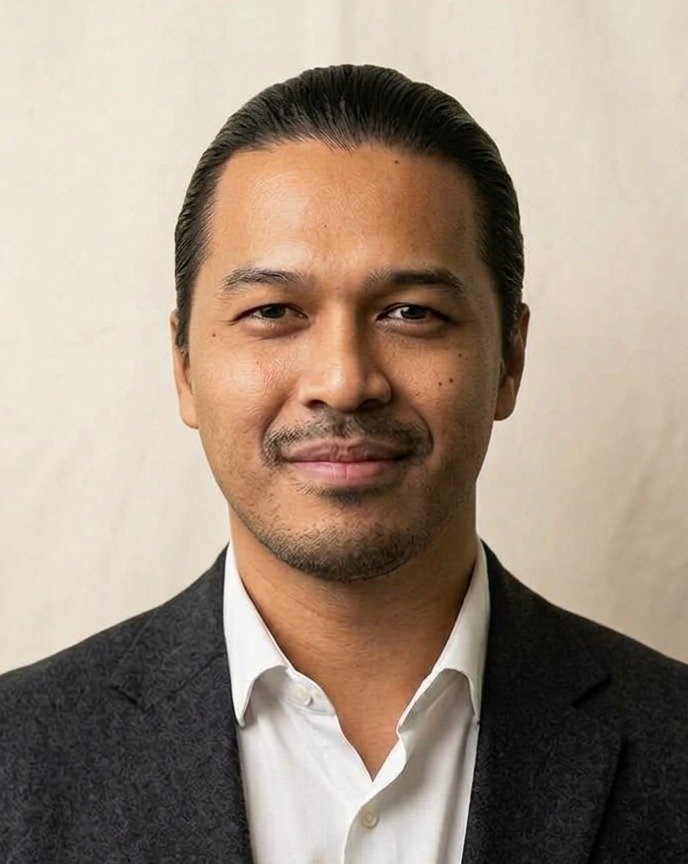
For Siddharth, the answer was rarely to walk away. The search for an explanation became the beginning of a journey.
There is a childhood memory that Dr Siddharth Tamang still carries with him. During Dasain visits to his grandmother’s house in Kurseong, he would notice cars struggling on the steep uphill roads. Sometimes they would slow almost to a halt. Sometimes they would stop altogether.
Why did that happen?
It was the sort of question a child might ask and an adult might answer in passing. But in Siddharth’s case, the adults around him often encouraged him to work things out for himself.
At home in Kalimpong, his father, Rudra Kumar Tamang, was frequently repairing something: an electrical fault, a plumbing problem, or the family’s old Maruti van. Siddharth watched as his father identified problems, tried solutions and worked towards getting things running again.
Long before he knew what a research laboratory looked like, he was learning that a machine which refused to work was not necessarily the end of the story. It was an invitation to find out why.
Today, Siddharth is an Assistant Professor in the Department of Mechanical Engineering at IIT Kharagpur. His work involves advanced manufacturing processes, joining materials, and developing technologies that could make industrial production more efficient and affordable.
The distance between those childhood observations and his present work is considerable. But the underlying impulse has remained remarkably consistent. He still wants to understand how things work.
A Sasonian, without a fixed destination
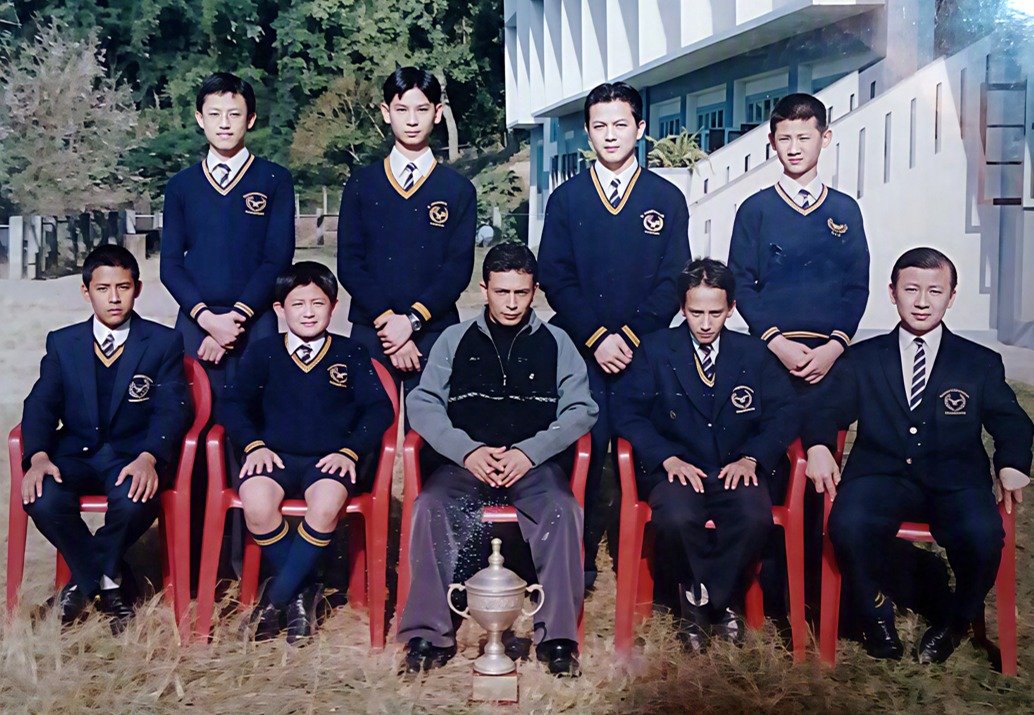
Siddharth’s memories of St. Augustine’s School are not confined to classrooms and examinations. He played the kettle drum in the school marching band and represented SAS in table tennis. He remembers a school environment in which boys competed seriously, whether in academics, sport or other activities.
He believes that environment helped prepare him for a world beyond Kalimpong. Competition, he discovered, was not something to fear simply because the people around him came from larger cities or more prominent institutions.
Yet there was no carefully mapped-out academic career waiting to unfold. He was fascinated by cars, machines and mechanics, but knew relatively little about the range of professional opportunities available beyond the hills.
His first major departure was to Haldia Institute of Technology, where he studied Mechanical Engineering. For someone accustomed to Kalimpong’s familiar surroundings, Haldia brought a different sort of education. He encountered students from across the country, adjusted to unfamiliar circumstances and began to appreciate how much larger the world was.
The important discovery was not merely that the world was large. It was that he could find his place in it.
Learning to live with unanswered questions
The next important turn came during his master’s studies at the Indian School of Mines, Dhanbad, now IIT (ISM) Dhanbad. It was there that Siddharth began to see engineering as something more than a body of established knowledge to be learned and reproduced.
Research presented a different challenge. Instead of solving a problem whose answer was already known, he could investigate questions for which the answers were uncertain.
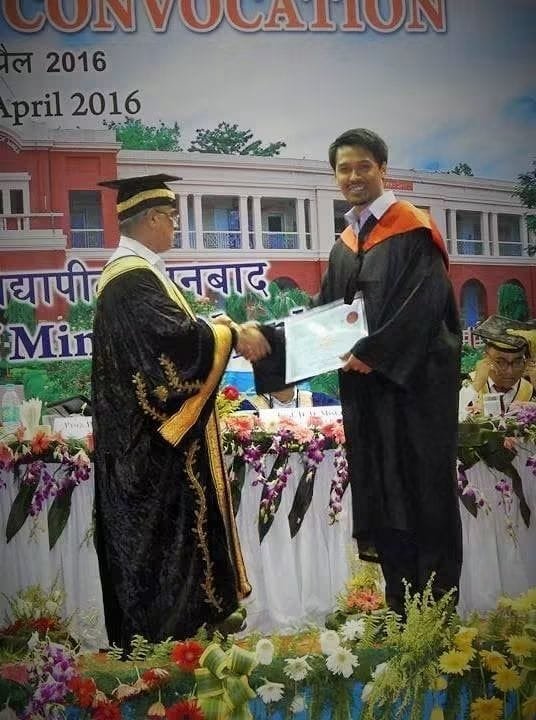
He became interested in manufacturing science, particularly welding and the technologies used to join materials. Joining two pieces of metal might appear to be an ordinary industrial operation. But the processes involved can be surprisingly complex, especially when the materials have different physical properties.
His growing interest took him to IIT Delhi for doctoral research into joining dissimilar materials using a novel welding technology. And there he encountered one of the less glamorous realities of scientific work.
Experiments fail. Results refuse to make sense. An approach that seemed promising turns out to be unsuitable. Weeks of work may require reconsideration.
Siddharth remembers an earlier period during his master’s studies when he had accumulated considerable experimental data but struggled to interpret it. He also remembers a roommate whose disciplined approach to studying made a lasting impression.
Progress often depends on returning to a difficult problem long after the initial enthusiasm has worn off.
“Ability may help you get started, but persistence is what helps you keep going when the path becomes difficult.”
For Siddharth, persistence does not mean repeating an unsuccessful experiment indefinitely. It means examining what went wrong, changing the approach where necessary, and continuing to investigate. There is something reassuringly unsentimental about that understanding of success. It makes room for failure without romanticising it.
From the laboratory to the wider world
Towards the end of his doctoral studies, Siddharth spent approximately a year working on a project associated with IIT Delhi’s Foundation for Innovation and Technology Transfer. The project addressed an industrial problem.
For a young researcher, the experience helped connect two worlds that are sometimes imagined as separate: academic investigation and practical industrial needs. He began to appreciate how work carried out in a laboratory could eventually influence the way something was manufactured or repaired outside the university.
His subsequent career took him to IIEST Shibpur, where he discovered another source of satisfaction: teaching. He found that helping students understand difficult concepts could be rewarding in its own right. Eventually, he joined IIT Kharagpur.
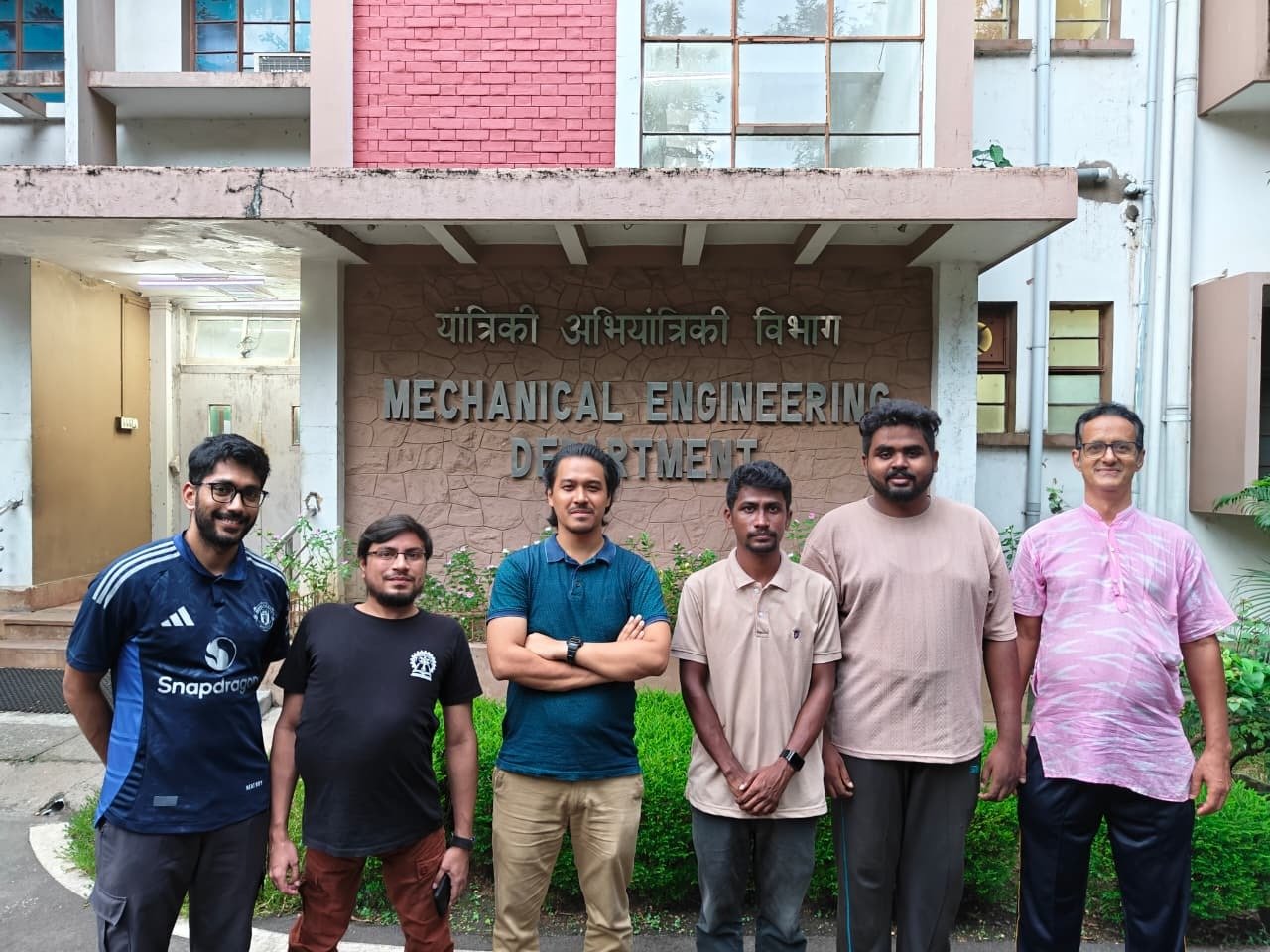
Today, he teaches and mentors undergraduate, postgraduate and doctoral students while pursuing research in manufacturing science and engineering.
Among his interests is the use of microwave energy to join materials such as metals and ceramics. He also works in additive manufacturing, more commonly known as 3D printing.
Unlike conventional manufacturing methods that often begin with a larger piece of material and remove what is unnecessary, additive manufacturing builds components progressively, layer by layer. The approach offers possibilities for producing complex shapes while reducing material waste.
Siddharth is particularly interested in whether advanced manufacturing technologies can be developed in ways that are economically practical for Indian industry. That last qualification matters. A process may work beautifully in a laboratory yet remain too expensive, complicated or unreliable for widespread industrial use.
His present research ambitions therefore extend beyond demonstrating that a technology is scientifically possible. He wants to investigate whether it can become sufficiently reliable, scalable and affordable to serve a practical purpose.
His academic work has also brought opportunities to engage with industry and research organisations, including work associated with Applied Materials and DRDO. He has participated in conferences and professional discussions in India and abroad, and represented IIT Kharagpur at the G20 International Standards Dialogue in New Delhi.
The place he came from
During his doctoral studies at IIT Delhi, Siddharth became increasingly conscious of how few people from his community and region were represented in advanced research and higher education.
He did not see himself as carrying some grand historical responsibility. But he did feel that his presence in such institutions might make the possibility seem a little more real to others from similar backgrounds.
Young people do not always lack ambition because they lack ability. Sometimes they simply have not encountered enough examples of people from familiar circumstances doing unfamiliar things.
Siddharth’s own path illustrates how misleading it can be to imagine academic careers as straight lines. He did not enter engineering with a clear plan to become a researcher. He did not begin doctoral studies knowing exactly where they would lead. Even his interest in teaching developed through experience rather than through a childhood declaration of intent.
His selection in the departmental round for an Assistant Professor position at IIT Bombay, although it did not result in his joining the institution, was one of several moments that strengthened his confidence.
There were also setbacks and disappointments. He remembers a line from India Today, which he encountered during his school years: “The harder you drop, the higher you bounce.” The words stayed with him, acquiring meaning as experience accumulated.
Perhaps that is one of the quieter influences of a school. Not every lesson announces its importance at the time. Some remain dormant until life supplies the circumstances in which they become useful.
What he would tell the boys at SAS
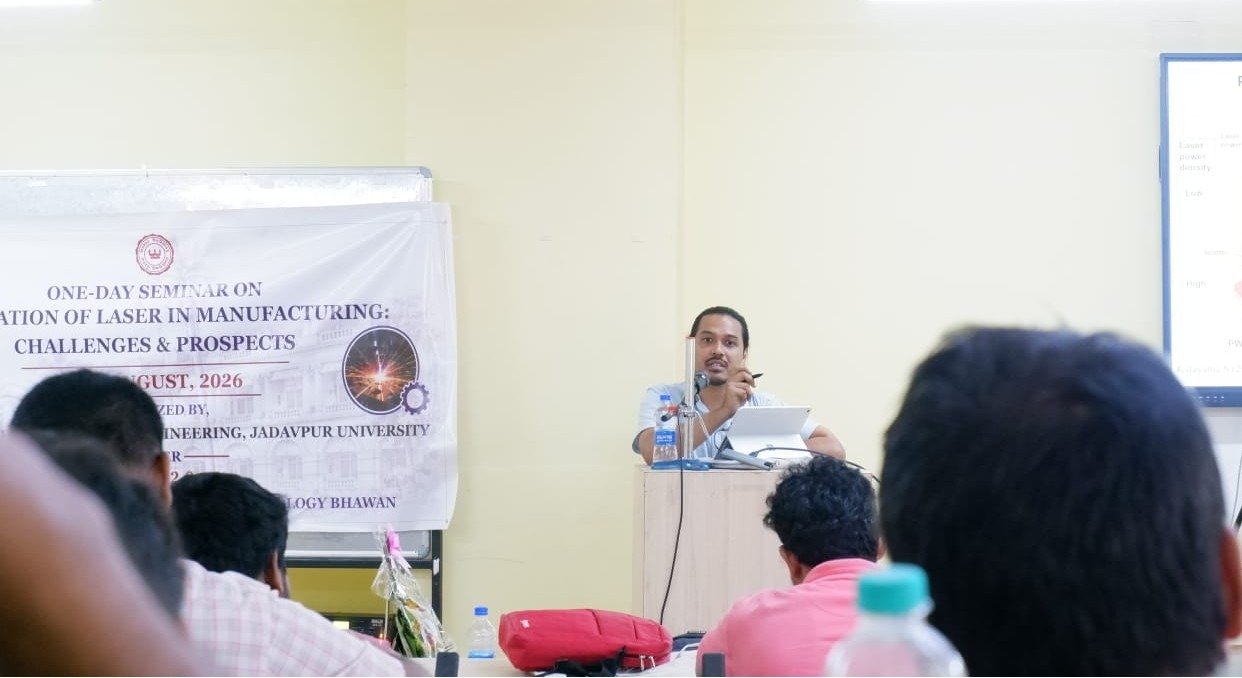
Asked what he would say to a present-day Sasonian interested in engineering, research or academic life, Siddharth does not begin with entrance examinations, institutional rankings or the importance of securing a prestigious position.
He begins with curiosity. Ask questions, he says. Find subjects that genuinely interest you. Do not assume that coming from a small town places a limit on what you can achieve.
Nor does he believe that young people must have their entire futures worked out while they are still at school. One subject, one teacher, one project or one unexpected opportunity may change the direction of a life.
He also cautions against measuring one’s progress too closely against that of others. Different people arrive at their destinations by different routes, and not always according to the timetable they originally imagined.
There will be disappointments. There will be occasions when an approach fails and another must be tried. And there will be people—teachers, friends, mentors—whose encouragement or example proves more influential than they might ever realise.
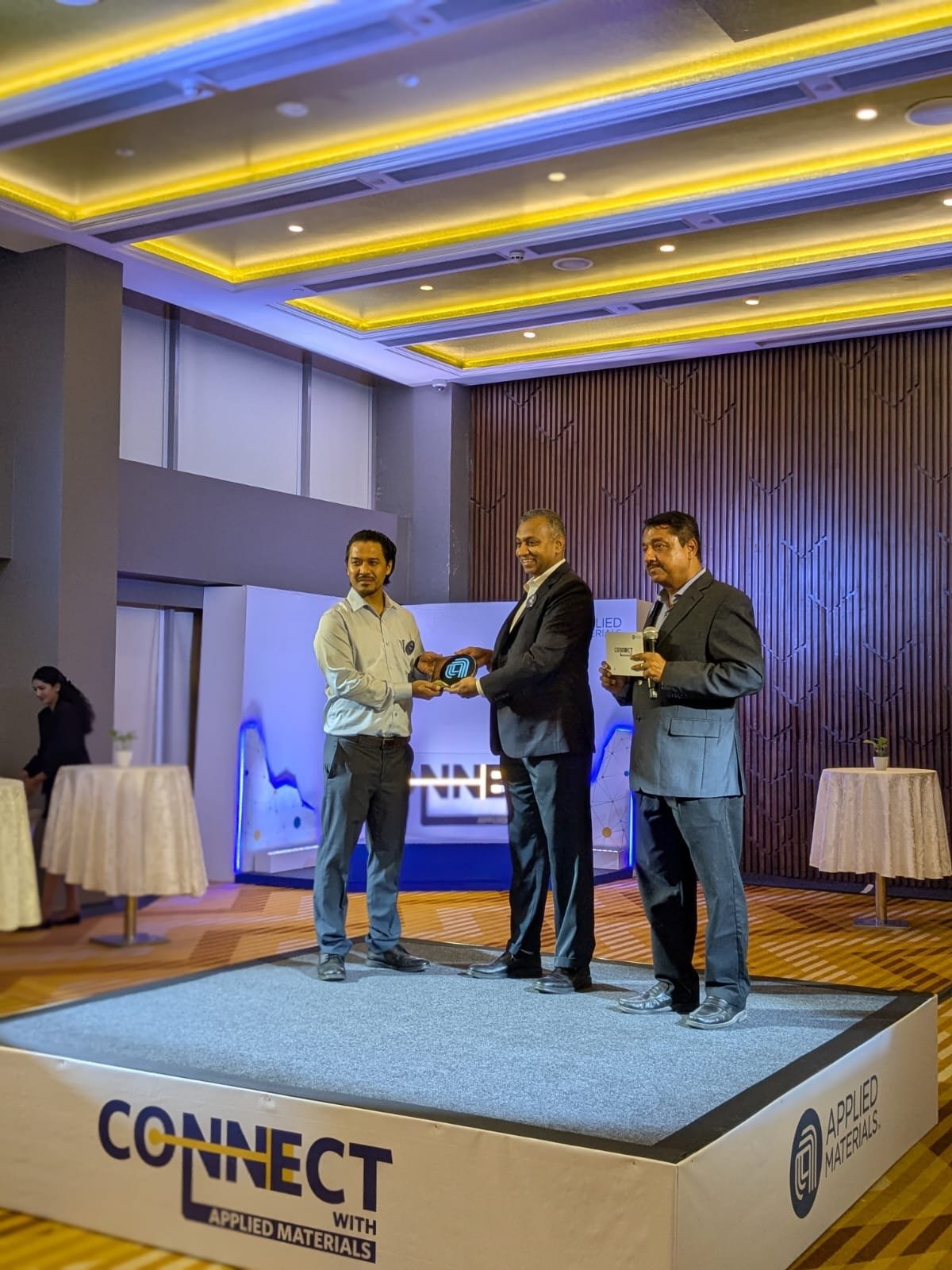
For Siddharth, the ambition now is to contribute to manufacturing technologies that Indian industry can actually use.
It is work that requires sophisticated equipment, specialist knowledge and collaboration across institutions. But it is also, in a rather pleasing way, connected to a boy watching his father repair the family van.
The circumstances have changed. The questions have become more complicated. The tools are certainly different.
What has endured is the conviction that when something does not work, the most interesting thing to do is find out why.
And sometimes, as Siddharth Tamang’s journey suggests, following that question can take you much further than you ever intended to go.